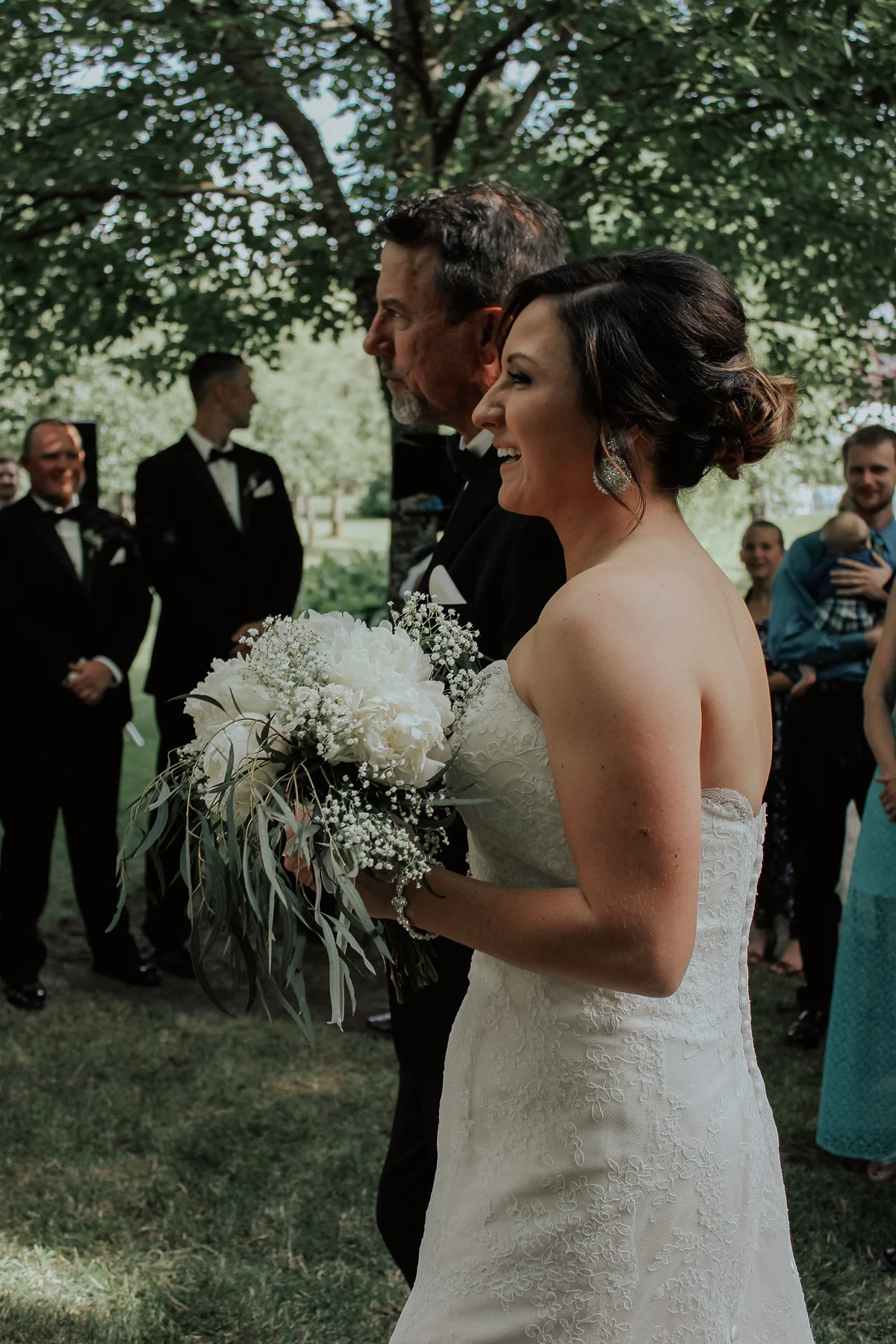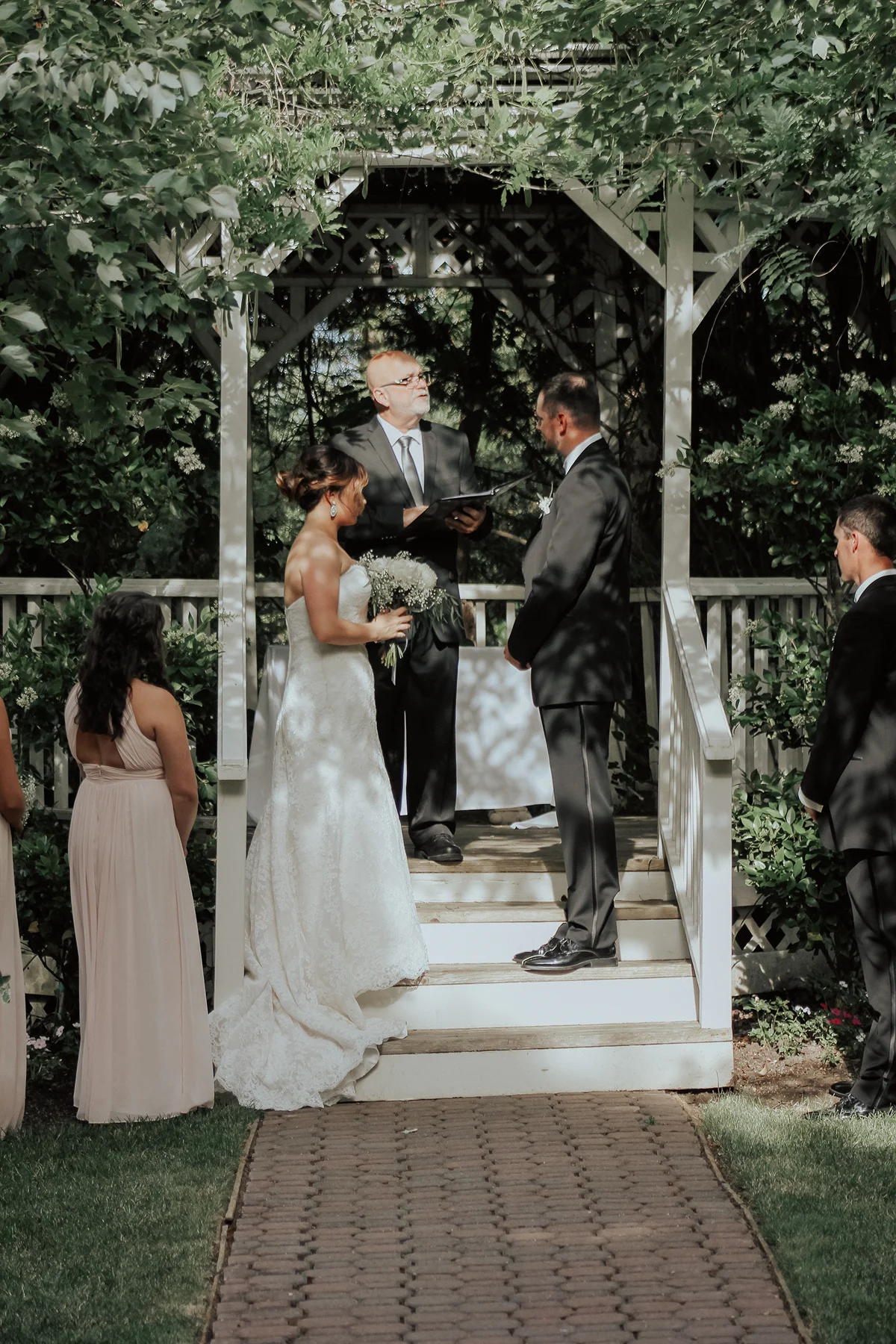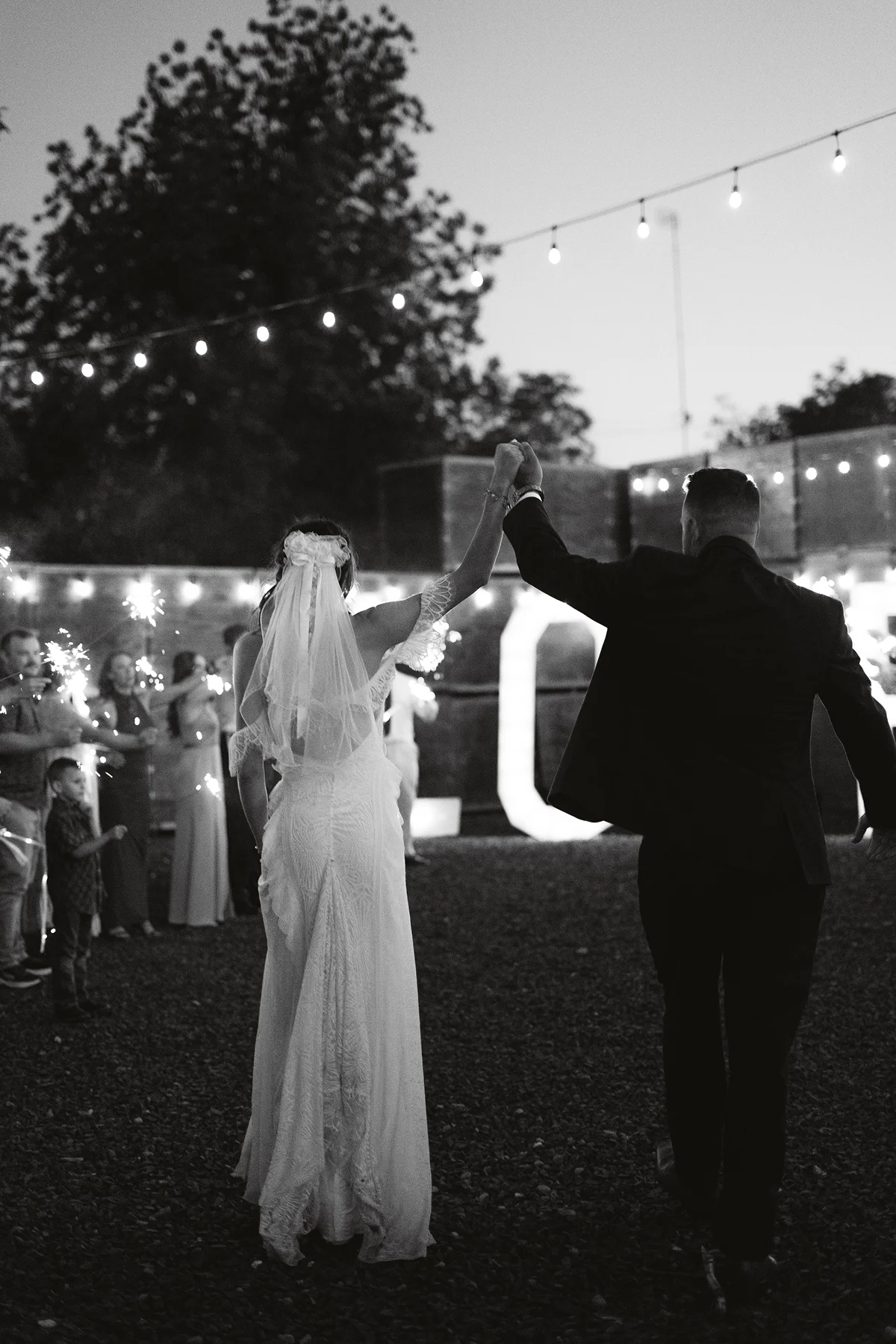
A wedding day has a way of moving faster than anyone expects. One minute you’re buttoning up a jacket or zipping a dress, and the next you’re being pulled toward the ceremony. A thoughtful wedding photography timeline is what keeps all of that from feeling like a scramble. It’s the quiet framework underneath the day — the thing that lets you actually be present instead of watching the clock.
At Dreamscape Studios, timeline planning is one of the most useful things we do for couples before the wedding even begins. Our biggest goal is that you don’t have to think about your photos on your wedding day — that’s your time. A well-built wedding day timeline is how we deliver on that promise. Below, we’ll walk through how much time each part of the day really takes, share sample schedules for an 8-hour and a 10-hour day, and explain how one decision — whether or not to do a first look — reshapes everything.
It’s tempting to think of the timeline as the planner’s job or the DJ’s job. But the photography timeline sits at the center of the whole day, because nearly every meaningful moment is something you’ll want documented. When photo time is underestimated, the day compresses: family portraits run into cocktail hour, the couple’s portraits get cut, and you end up feeling rushed during the parts you most wanted to savor.
A realistic wedding photo timeline does three things. It protects the moments that matter most to you. It gives your vendors a shared plan so the caterer, the coordinator, and the band are all working from the same page. And it builds in breathing room, so a late hairstylist or a surprise rain shower doesn’t topple the entire afternoon.
The good news: you don’t have to build this alone. When you book us, we help draft the timeline with you, coordinate it with your other vendors, and then quietly run it on the day itself.
Every wedding is different, but these ranges hold true across most celebrations. Think of them as starting points we’ll tailor to your venue, your guest count, and your priorities.
We like to arrive while hair and makeup are wrapping up, when the room still has that anticipatory calm. This is where we capture details — the dress, rings, invitation suite, shoes — plus candid moments with your people. If you want both partners’ preparations documented and they’re in separate locations, budget more time or consider a second shooter so we can be in two places at once.
A first look is a private moment before the ceremony where you see each other for the first time. If you choose one, we set aside 20 to 30 minutes for it, ideally in a quiet, pretty spot. More on how this reshapes the day below.
Ceremony length varies enormously. A short civil or non-religious ceremony might run 20 minutes; a full religious service can run an hour or more. We plan around your officiant’s actual format rather than a guess.
This is the block couples most often underestimate. A tight, pre-planned shot list moves quickly; an open-ended “let’s just grab everyone” approach eats time fast. We recommend building a family portrait list ahead of time — roughly two to three minutes per grouping is realistic. We’ll help you draft it.
Group photos with your wedding party, plus a few relaxed, candid frames. Larger parties need the upper end of that range.
Your portraits together are where our documentary, unposed approach shines. We’re not looking to stage you into stiff poses — we give gentle direction, then let real moments happen. Thirty to forty-five minutes gives us room to move to a second location or catch changing light without rushing.
The window shortly before sunset produces some of the warmest, most flattering light of the day. If your schedule allows, we love stealing you away from the reception for a few minutes here. It’s brief, low-key, and consistently yields favorite images.
Entrances, toasts, first dances, parent dances, cake, and open dancing. Coverage length here depends on how much of the party you want documented. Many couples find that a couple of hours of dancing captures the energy without needing us to stay until the last song.
The single biggest fork in your wedding day timeline is whether you do a first look. It’s worth understanding both paths — and there’s no wrong answer.
With a first look, you see each other before the ceremony. This lets us complete most portraits — couple’s photos, wedding party, and often much of the family list — before you walk down the aisle. The payoff is huge: after the ceremony, you can head straight to cocktail hour and enjoy your own party. Couples who value a relaxed evening and more time with guests often love this path.
Without a first look (traditional), you preserve the classic moment of seeing each other for the first time at the aisle. The trade-off is that all portraits happen after the ceremony, usually during cocktail hour, which means a tighter, more choreographed window. It’s completely doable — we do it often — it just requires a well-planned schedule and, ideally, a first look alternative like a scheduled cocktail hour buffer.
If you’re weighing this decision, our companion guide on first look versus traditional walks through it in more depth. Either way, we’ll build the timeline to match your choice.
Here are two realistic schedules. Treat them as templates, not rules — we’ll adjust to your ceremony time, sunset, and venue.
Time | What’s happening |
|---|---|
1:30 PM | Coverage begins — getting ready, details |
2:30 PM | First look and couple’s portraits |
3:00 PM | Wedding party photos |
3:30 PM | Family portraits |
4:00 PM | Tuck away, freshen up, buffer |
4:30 PM | Ceremony |
5:00 PM | Cocktail hour — you enjoy it |
6:00 PM | Reception entrance and dinner |
7:00 PM | Toasts and first dances |
7:45 PM | Golden hour portraits (weather permitting) |
8:00 PM | Open dancing |
9:30 PM | Coverage ends |
Time | What’s happening |
|---|---|
12:00 PM | Coverage begins — both partners getting ready |
1:30 PM | Details and pre-ceremony candids |
2:30 PM | Ceremony |
3:00 PM | Family portraits |
3:45 PM | Wedding party photos |
4:15 PM | Couple’s portraits |
5:00 PM | Reception entrance and dinner |
6:30 PM | Toasts and first dances |
7:30 PM | Golden hour portraits (weather permitting) |
8:00 PM | Open dancing, cake, celebrations |
10:00 PM | Coverage ends |
*Notice the buffer blocks. Those small cushions are intentional — they absorb the inevitable small delays without derailing everything after.
If we could give one piece of timeline advice, it’s this: build in more buffer than you think you need. Hair and makeup famously run long. Transportation hits traffic. A quick hug from grandma turns into a ten-minute conversation, and it should. Padding each transition by ten or fifteen minutes means the day flexes instead of breaks. A timeline with no slack is a timeline that makes everyone anxious — and anxiety shows up in photos.
Your timeline only works if everyone shares it. We coordinate closely with your planner or coordinator, and we’re happy to sync with your caterer, DJ or band, florist, and officiant so the schedule reflects reality. A few coordination points that matter:
When these pieces line up, the day flows. And because we bring backup gear, redundancy, and years of navigating tricky light and shifting timelines, we can adapt calmly when something inevitably shifts.
How much time should I budget for wedding photos overall? Most couples land between 8 and 10 hours of coverage. Eight hours comfortably covers a first-look day; ten hours suits a traditional day or one with two getting-ready locations and a longer reception.
How long do family formal portraits really take? Plan on roughly two to three minutes per grouping. A list of 10 to 15 combinations fits neatly into a 30-to-45-minute block when everyone knows where to be.
Do we need a first look? No — it’s entirely your call. A first look gives you more portrait time and a freer evening; a traditional approach preserves the aisle moment. We plan beautifully around either.
What happens if the day runs behind? This is exactly why we build in buffer time and coordinate with your vendors. Small delays are normal, and a well-padded timeline absorbs them without cutting the moments you care about.
Should we schedule golden hour portraits? If your sunset lines up with your reception, we highly recommend a brief 15-to-20-minute step outside. The light is worth it, and it doubles as a quiet breather together.
Can you help us build the timeline? Yes. Timeline planning is part of working with us. We draft it with you and coordinate it with your other vendors so the day runs smoothly.
A great wedding day timeline isn’t about squeezing in more — it’s about protecting the moments that matter and giving you room to enjoy them. That’s the whole point: on your wedding day, you shouldn’t be thinking about your photos at all.
If you’re planning a wedding in St. Louis or anywhere in Missouri, we’d love to talk through your day. Reach out for a no-pressure consultation — we’ll check your date, answer your timeline questions, and put together a custom quote. To see how our approach fits the bigger picture, explore our main St. Louis wedding photography guide, or read more about the look and feel of our work in our wedding photography style guide.